
Prediction Markets vs. Sports Betting
Prediction markets price probabilities on a CFTC-regulated exchange; sportsbooks quote house-set odds under state gaming law.
Answer
Prediction markets price outcomes as probabilities (0¢–$1) on a peer-to-peer exchange regulated by the CFTC. Sportsbooks quote fixed odds under state gaming licenses and take the other side of your bet, embedding a house margin. Both involve real loss risk — they just structure that risk very differently.
Kalshi · Trade $25 and Get $25!
NYPREDICTS
Certain limitations apply. The offer is available to new users only, subject to the terms and conditions at kalshi.com/tc/500. 18+ only. Restrictions and eligibility requirements apply. Event contract trading involves significant risk and is not appropriate for everyone. Please carefully consider if it is appropriate for you in light of your personal financial circumstances. Kalshi products are not available in all jurisdictions. See kalshi.com/regulatory for more information.
Last checked October 5, 2026
Founder & Editor-in-Chief
The core distinction
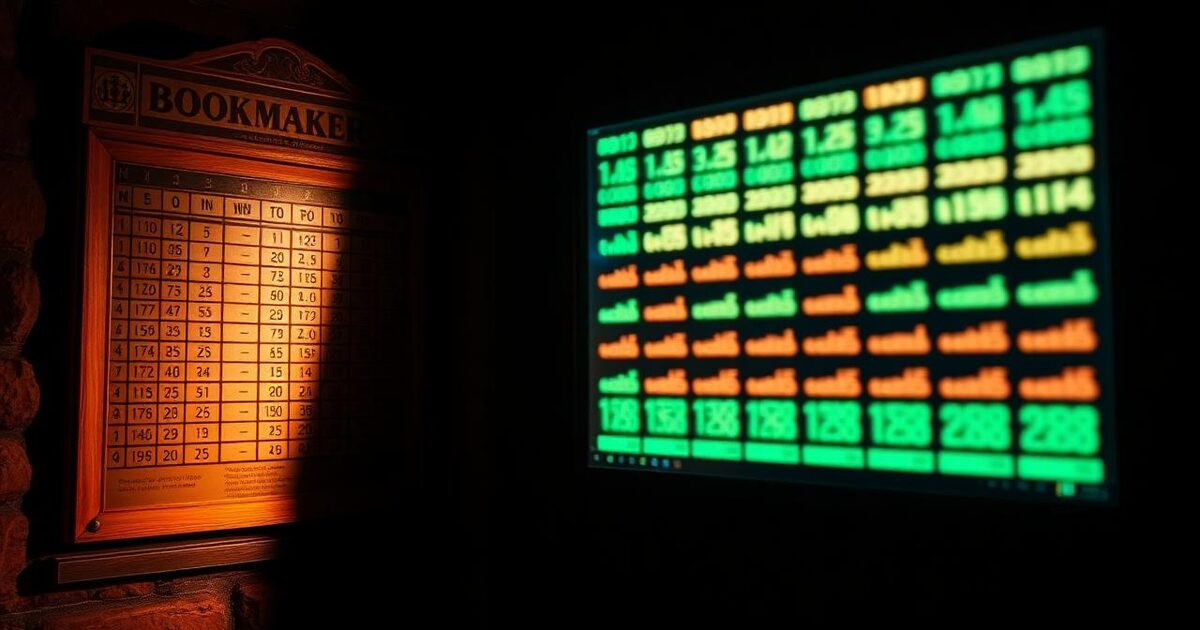
A prediction market is a peer-to-peer exchange. When you buy a 'yes' contract at 62¢, someone else is selling it to you at that price; the venue matches trades and clears settlement. A sportsbook is a counterparty. When you take a point spread at a house price, the book is on the other side of your ticket, and its quoted price embeds the margin (the 'vig').
That single difference cascades into everything else — pricing, edge, exit options, and what each product is genuinely best for.
Side-by-side comparison
The mechanics look similar on the surface — you're picking outcomes and putting money at risk — but the structural details matter for anyone deciding where to trade.
| Prediction markets | Sportsbooks | |
|---|---|---|
| Regulator (US) | CFTC (federal event contracts) | State gaming commissions (e.g., NYSGC) |
| Pricing model | 0¢–100¢ per contract; price = implied probability | American/decimal odds with house margin baked in |
| House edge | Small per-trade fees; no embedded vig | Typically 4–6% on standard lines; higher on props/parlays |
| Counterparty | Another user, matched by the exchange | The book itself |
| Liquidity depth | Deepest on macro, politics, headline events | Deepest on major-league game lines and props |
| Market types | Binary event contracts; some scalar/range | Moneyline, spread, total, props, parlays, live |
| Early exit | Sell any time at market | Cash-out where offered, often at a haircut |
| Best for | Hedging, information trading, non-sports events | In-game action, parlays, familiar sports betting UX |
Structural comparison. Fee and payout specifics vary by venue and market — confirm on the platform.
Pricing and edge, explained
On a prediction market, a contract at 62¢ implies a 62% probability. If you think the true probability is 70%, that's an 8-point edge — and you can size your position accordingly. Fees are small and disclosed per trade.
A house quote already includes the book's margin. As *Sportico* and industry commentary at pmpmedia.io have documented, the average hold across US mobile sportsbooks runs 4–6% on standard lines and materially higher on same-game parlays. That's the price of the convenience and the counterparty guarantee.
Neither is 'better' in the abstract. On a market you have a genuine edge in, a prediction market's clean pricing lets that edge compound. On a game you just want to sweat with friends, a sportsbook's UX and in-play tools are hard to beat.
Regulation and consumer protection
Prediction markets in the US operate under CFTC oversight — the same regulator that supervises futures and derivatives. Kalshi is a registered Designated Contract Market; Polymarket returned to the US through a CFTC-regulated affiliate. That's a federal framework, not a state one.
Sportsbooks are licensed state-by-state. In New York, that's the NY State Gaming Commission, which sets rules on operator conduct, responsible-gambling controls, and integrity monitoring. Both frameworks offer real consumer protection; they just answer to different authorities and cover different products.
Where each product wins
Prediction markets are the cleaner venue for non-sports events (Fed decisions, elections, awards, cultural outcomes) and for anything binary you can define precisely. They're also the natural home for hedging — locking in an outcome you're already exposed to elsewhere, which is not something a sportsbook is designed for.
Sportsbooks remain the most fluid product for in-game lines, spreads, totals, and parlays across major US leagues. If your use case is 'watch the Knicks with money on the game,' a licensed NY sportsbook is generally the right tool.
For player-prop pick'em, Sleeper and Chalkboard sit between the two: DFS-style contests on individual player lines, governed by state fantasy rules rather than either CFTC or sportsbook frameworks.
How New Yorkers actually mix them
In practice, most engaged NY users end up with both. A Kalshi account for Fed weeks, mayoral race markets, and headline binary events. And Polymarket for the same event markets Kalshi covers, when the probability looks better on the other book.
The mental model that works: pick the tool that fits the trade, not the other way around. And size positions to the platform — prediction-market resolution can take days or weeks; sportsbook tickets settle the same night.
Platforms mentioned
- Kalshi review
CFTC-regulated event contracts on politics, economics, and culture.
- Polymarket review
The world's most-watched prediction market — deposit $10 and get a $25 trading bonus.
- Sleeper review
Fantasy-first social platform with picks and player markets - travel-only for New Yorkers under NY's DFS pick'em rules.
- Chalkboard review
Player-prop pick'em with a clean mobile-native feel - travel-only for New Yorkers under NY pick'em rules.
Sources & references
Where to trade this
Trade New York markets on
- CFTC-regulated event contracts on politics, economics, and culture.
- Crypto.com's prediction-market app: trade $25, get $25 in rewards with code NYPREDICTS. Sports, culture, macro and trending contracts, live in New York.
Aff.We earn a commission on partner signups. Disclosure.
FAQ
Frequently asked questions
Which is cheaper for the same bet — a prediction market or a sportsbook?
Usually the prediction market, because you trade against other users instead of paying a bookmaker's built-in margin. Always compare the exchange's published fee schedule against the sportsbook's implied hold before deciding.
What's the biggest difference between prediction markets and sportsbooks?
Prediction markets are peer-to-peer exchanges under CFTC oversight where prices reflect implied probability. Sportsbooks are counterparty operations under state gaming law that quote house-set odds with a margin embedded.
Which one has a lower house edge?
Prediction markets. Regulated venues like Kalshi charge small disclosed fees per trade rather than embedding a 4–6% margin the way sportsbooks do on standard lines.
Is one safer than the other?
Both involve real loss risk. Regulated venues — federal CFTC exchanges or state-licensed sportsbooks — offer strong consumer protections; unlicensed offshore sites do not, regardless of what they call themselves.
Can I use both?
Yes, and many engaged users do. The trade-off is between the cleaner pricing and non-sports coverage of prediction markets and the in-game fluidity of licensed sportsbooks.
Do prediction markets cover live in-game betting?
Sparingly. Prediction markets can list live binary questions (e.g., 'Will there be another goal?'), but the deepest in-game markets remain on sportsbooks. Use prediction markets for pre-event and headline outcomes.
Are pick'em fantasy games a prediction market?
No. Pick'em products from Sleeper and Chalkboard are DFS contests governed by state fantasy rules. They're closer to a sportsbook prop in feel and to fantasy sports in legal classification.
Which is legal in New York?
Both, in their federal and state lanes respectively. Kalshi and Polymarket US are available in New York under CFTC oversight, while New York's case against them is still in court; licensed mobile sportsbooks operate under NYSGC authority. See our New York legality guide for detail.
What should a first-timer try first?
Whichever fits an event you already follow. A Fed-week Kalshi contract or a Knicks moneyline at a licensed NY sportsbook are both reasonable starting points at small size.
18+ · T&Cs apply · Terms
Certain limitations apply. The offer is available to new users only, subject to the terms and conditions at kalshi.com/tc/500. 18+ only. Restrictions and eligibility requirements apply. Event contract trading involves significant risk and is not appropriate for everyone. Please carefully consider if it is appropriate for you in light of your personal financial circumstances. Kalshi products are not available in all jurisdictions. See kalshi.com/regulatory for more information.